2026 Q3 Impact Report
This Q3 Impact Report highlights progress toward regenerative certification, new soil carbon research, and continued efforts to strengthen agricultural resilience and environmental partnerships at Rainmaker Farm.
Letter from Leadership and Team
From Commitment to Measurable Impact
Big ideas are important. But what excites us most at The Gulch Environmental Foundation is the opportunity to put those ideas to work.
At Rainmaker Farm, our 160-acre regenerative agriculture research and demonstration farm in north-central Oklahoma, we’re doing just that. Every growing season brings new challenges, discoveries, and opportunities to demonstrate how agriculture can contribute to a healthier, more resilient environment.
The third quarter of 2026 was no exception.
This quarter, we made meaningful progress toward achieving Certified Regenerative status through A Greener World, advanced our research collaboration with Oklahoma State University, and expanded our engagement with organizations exploring the connections between agriculture, sustainability, and carbon management.
One of the most exciting aspects of our work is moving beyond talking about regenerative agriculture to demonstrating its benefits through research and real-world experience. Our ongoing collaboration with Oklahoma State University is strengthening the scientific foundation of our work. Through continued soil health and carbon research, we’re building the evidence needed to better understand the long-term effects of regenerative management practices. We look forward to sharing those results in Q4.
Of course, research is only part of the story. Regeneration happens in the field, one decision at a time. Throughout the summer, our team navigated planting schedules, managed grazing, cared for our growing orchard, and adapted to the challenges that come with farming. Each decision contributes to the productive, resilient agricultural systems we’re working to demonstrate.
Our work also took us beyond Oklahoma this quarter. Through participation in Climate Week NYC, we helped bring agriculture into conversations about environmental solutions. We believe agriculture deserves a prominent seat at that table, particularly when addressing soil health, water quality, biodiversity, and climate resilience.
And that’s where we see an even greater opportunity for The Gulch.
Rainmaker Farm isn’t intended to be an isolated example of regenerative agriculture. Our vision is to create a place where research meets real-world application, innovative ideas are tested, and lessons learned can help others make informed decisions. By connecting researchers, farmers, businesses, and organizations with shared environmental goals, we can extend our impact far beyond the farm itself.
As we look ahead, we’re energized by our progress and the possibilities that collaboration can unlock. Whether you’re discovering The Gulch for the first time or have followed our journey from the beginning, we invite you to be part of what comes next.
The Gulch Environmental Foundation
Leadership and Team
Putting Our Regenerative Commitment to the Test
Advancing Toward Certified Regenerative Status
At Rainmaker Farm, regenerative agriculture has never been just a goal. It’s the foundation of how we manage the land, make decisions, and measure progress. Now, we’re taking an important step toward having those efforts independently verified.
In July, Rainmaker Farm submitted its application for Certified Regenerative status through A Greener World (AGW), marking a significant milestone in a journey that began years ago. Following a request for additional clarification in late August, our team provided the requested information in mid-September and received confirmation that the application had advanced to the audit stage.
AGW’s certification program takes a comprehensive approach to regeneration, evaluating how agricultural operations manage soil health, water resources, biodiversity, livestock, and social responsibility, with an emphasis on documented practices and continuous improvement.
For Rainmaker Farm, this process offers an opportunity to evaluate the progress we’ve made since transitioning to no-till management in 2021, while identifying opportunities to strengthen our approach.
The certification process also complements our ongoing research with Oklahoma State University. Together, independent assessment and scientific monitoring can help us better understand the environmental outcomes of our management decisions and communicate those findings with greater confidence.
Why does this matter? Because meaningful environmental progress requires more than good intentions. It requires accountability, credible evidence, and a willingness to continually improve.
As we advance through the certification process, we’re building a stronger foundation for the research, demonstration, and partnerships that will help extend Rainmaker Farm’s impact beyond its boundaries.
Since Quarter-End: Rainmaker Farm completed its AGW Certified Regenerative audit on October 15, 2026. The certification review process remains ongoing.
Diverse Crops, Real-World Challenges
Summer planting at Rainmaker Farm brought a powerful reminder that even the best agricultural plans remain subject to Mother Nature.
Following the winter wheat harvest, double-crop soybeans were planted in South Field, while East Field was seeded with a mixture of cowpeas and haygrazer. Unfortunately, severe summer heat and drought conditions prevented these crops from successfully emerging.
These challenges were not unique to Rainmaker Farm. Oklahoma experienced its fifth-driest August and hottest September on record, with drought conditions intensifying across the state.
While the unsuccessful establishment was disappointing, it also reinforces why our work matters. Developing more resilient agricultural systems requires understanding how crops, soils, and management practices respond to environmental stress.
At Rainmaker Farm, these experiences inform future decisions about planting strategies, soil moisture conservation, and crop selection. They also highlight the importance of continued research into agricultural resilience as growing conditions become increasingly challenging.
Regenerative agriculture doesn’t eliminate the risks of farming. Our goal is to better understand those risks and develop practices that help agricultural systems respond and adapt.
Hotter Than a Dust Bowl-Era Record
Oklahoma experienced its hottest September on record in 2026, with an average temperature of 82.8°F—surpassing the previous record set in 1931 by 2.7°F.
Combined with one of the state’s driest Augusts on record, the extreme conditions underscore the importance of developing agricultural systems capable of responding to heat and water stress.
Source: Oklahoma Mesonet / Oklahoma Climatological Survey, October 2026.
Livestock as Partners in Regeneration
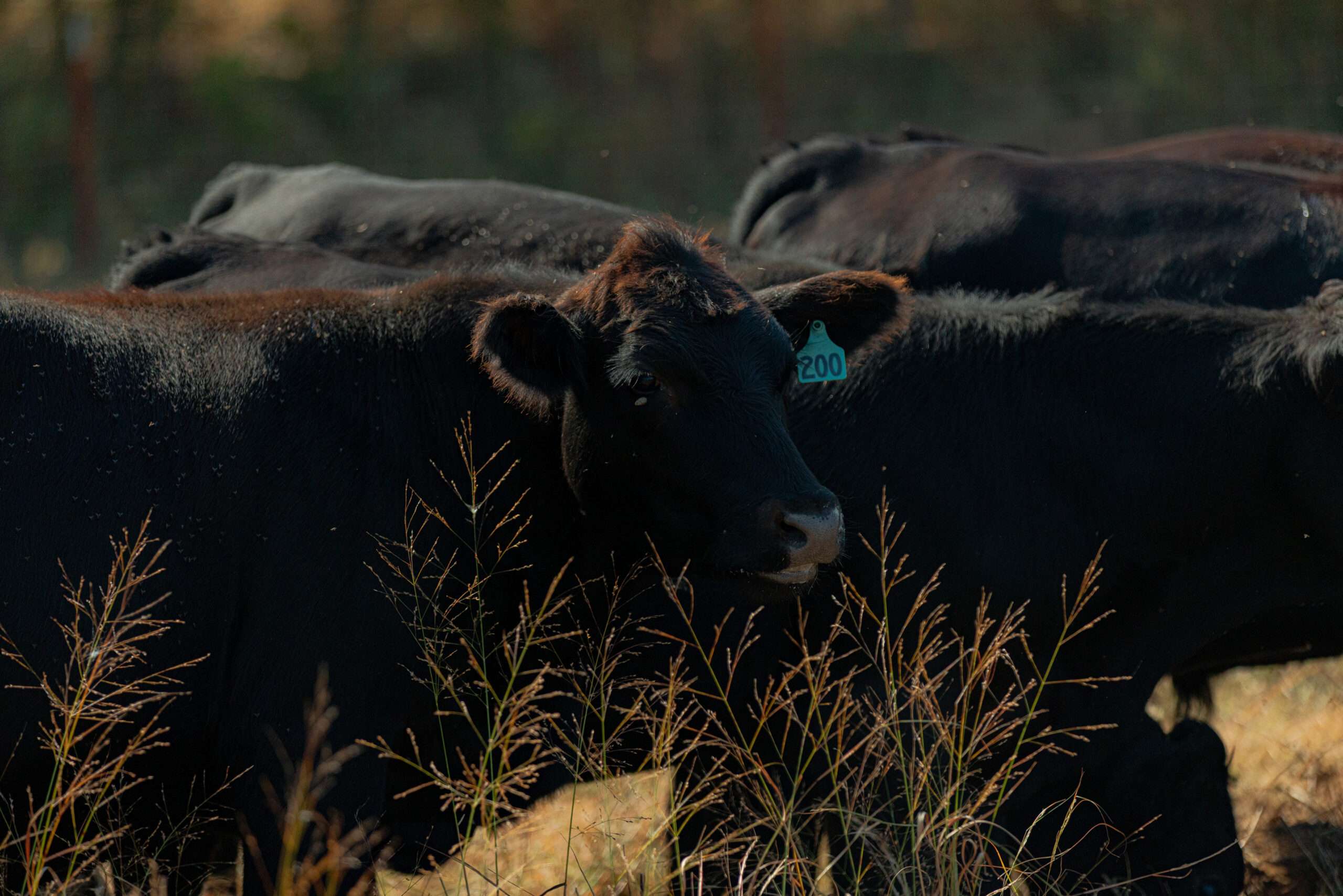
At Rainmaker Farm, cattle are more than part of the agricultural landscape. They’re an important component of our approach to building healthier, more resilient ecosystems.
From May 11 through August 6, 18 yearling steers grazed the farm’s permanent pasture, continuing our efforts to integrate livestock into regenerative land management.
By integrating livestock with crop production and habitat restoration, we’re working toward a more connected agricultural system—one where each component contributes to the health and resilience of the whole.
Groot’s Orchard: Growing More Than Trees
Some of the most meaningful investments in regenerative agriculture take years to reveal their full impact. Groot’s Orchard is one of those investments.
Established with the help of volunteers and supporters, the orchard represents our commitment to perennial vegetation, biodiversity, and creating a lasting legacy at Rainmaker Farm.
This summer, prolonged dry conditions presented challenges for the young orchard. To provide supplemental moisture, our team continued using repurposed protein tubs as watering reservoirs, expanding the system as needed. While simple in design, these creative solutions helped us respond to immediate challenges as we continue planning a more permanent rainwater-fed irrigation system.
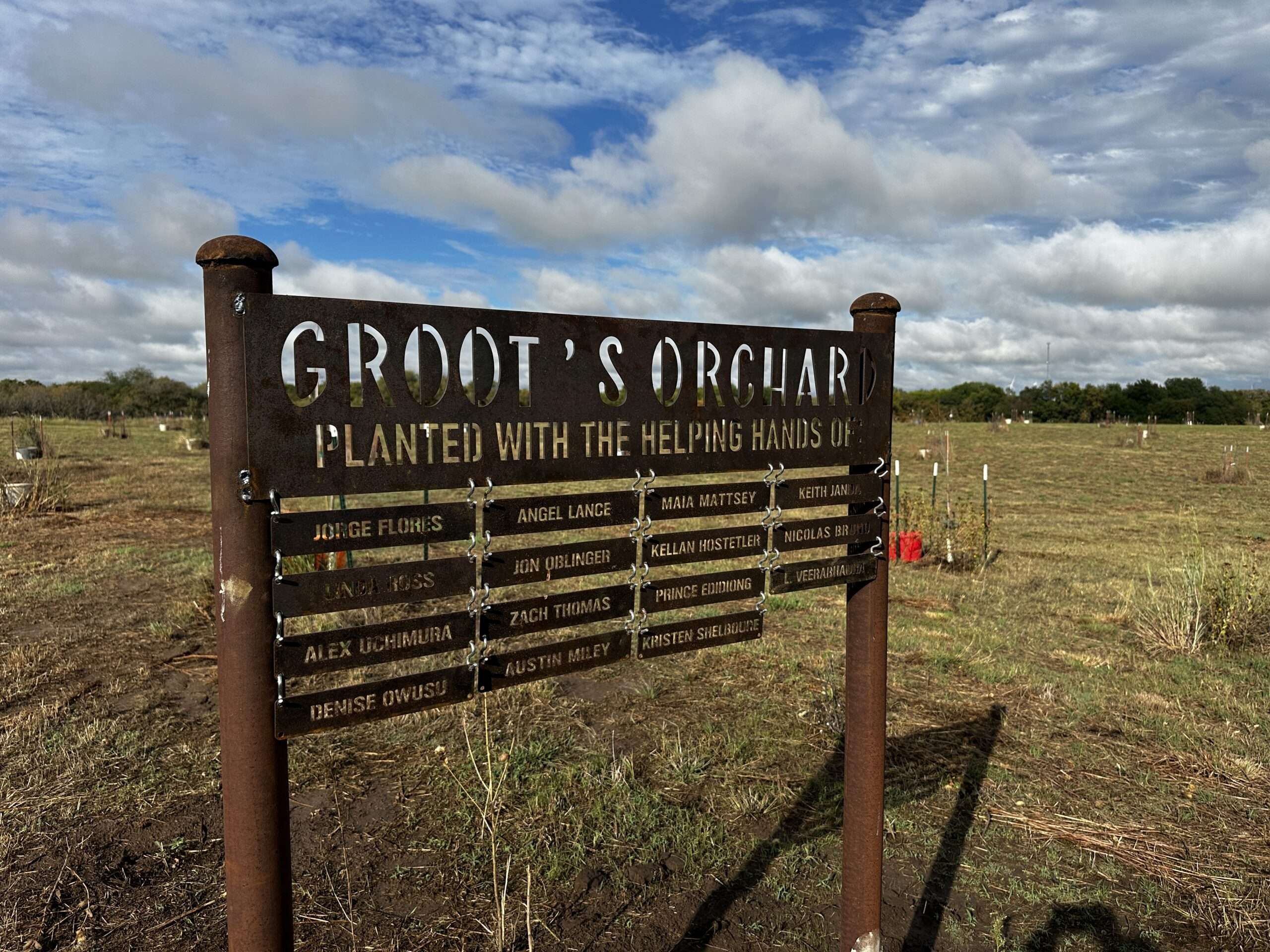
The orchard also gained a meaningful new addition: a commemorative sign recognizing the individuals who have helped plant trees and establish this growing landscape over the years.
More than a marker along the farm’s pathways, the sign is a reminder that lasting environmental progress is built through the contributions of many people. Every name represents someone who has played a role in shaping the future of Rainmaker Farm.
As the orchard continues to develop, it will serve as both a living demonstration of perennial agriculture and a lasting tribute to the people who helped bring it to life.
From Footprint to Impact
Connecting Carbon Awareness to Meaningful Action at Climate Week NYC
Every journey leaves a footprint. But how often do we stop to consider what that footprint actually means?
That was the question at the heart of The Gulch Environmental Foundation’s presentation at Climate Week NYC in September 2026.
Executive Director Julie Hewitt joined Katerina Deliargyris from Motive Power on the Momentum Stage to present From Footprint to Impact: You Made Your Trip. Now Make It Count. Together, they explored how something as complex and abstract as carbon emissions can become personal, understandable, and actionable.
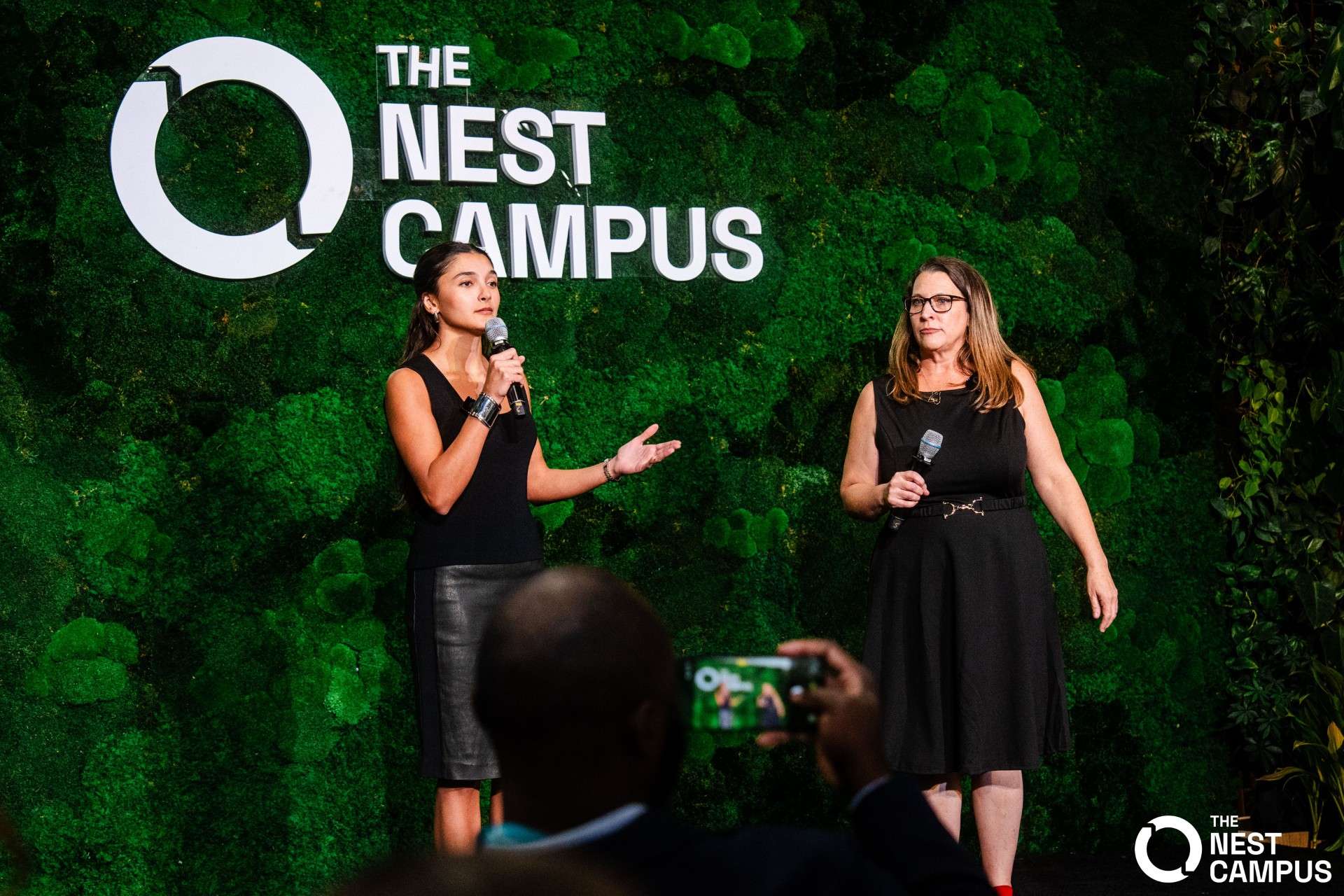
The presentation highlighted the unique relationship between Motive Power and The Gulch, two sister organizations approaching environmental challenges from complementary directions. Motive Power helps organizations navigate the energy transition, while The Gulch connects environmental awareness to tangible action through regenerative agriculture and research at Rainmaker Farm.
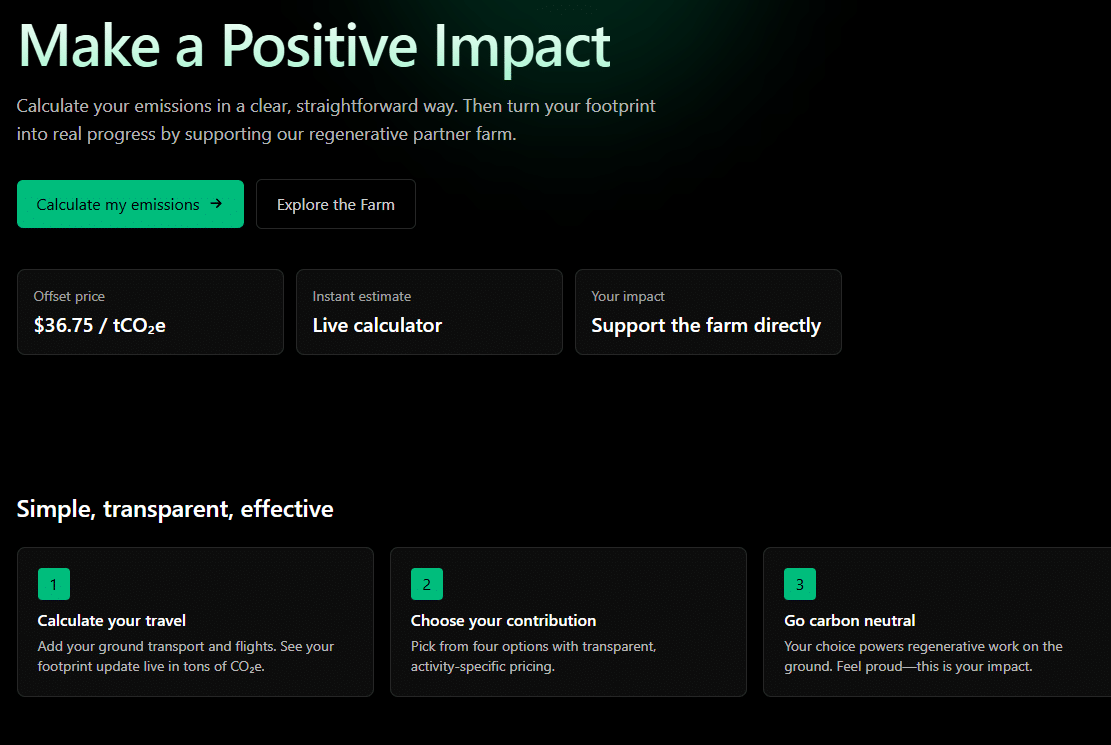
Central to their collaboration is the Gulch Carbon Calculator, a tool designed around three simple steps: Measure. Understand. Act.
By entering travel information, individuals can estimate their carbon footprint, see that footprint translated into relatable everyday comparisons, and explore opportunities to support carbon drawdown activities at Rainmaker Farm.
The presentation demonstrated this concept using a real-world example: Julie’s trip from Chicago to New York. By translating the emissions associated with a familiar activity into something more understandable, the calculator helps bridge the gap between environmental awareness and individual action.
But carbon is only part of the story.
At Rainmaker Farm, The Gulch is exploring what we call a stacked outcomes approach, recognizing that improvements in soil health can influence carbon storage, water resources, biodiversity, and ultimately agricultural resilience.
The larger opportunity lies in connecting these efforts. By making carbon footprints easier to understand and providing a pathway to participate in environmental projects, Motive Power and The Gulch are developing a model for collaboration that could extend to other organizations.
Our message at Climate Week was simple: understanding your environmental footprint is the first step. Turning that understanding into meaningful action is where the real opportunity begins.
For The Gulch, Climate Week NYC was more than an opportunity to share our work. It was an invitation to organizations interested in testing, measuring, and advancing environmental solutions through real-world partnerships.
Growing Our Impact Through Collaboration
Creating Opportunities for Research, Innovation, and Shared Learning
At The Gulch Environmental Foundation, we believe meaningful environmental solutions emerge when people with different perspectives come together around shared challenges.
Our relationships with Oklahoma State University and Motive Power demonstrate how scientific research and corporate engagement can complement the practical work happening at Rainmaker Farm.
Throughout the third quarter, we continued exploring connections with agricultural innovators, researchers, and organizations interested in regenerative agriculture and carbon management. These conversations help us identify opportunities to evaluate emerging technologies, develop research initiatives, and share practical knowledge.
As a working agricultural landscape, Rainmaker Farm offers something particularly valuable: an opportunity to explore new ideas under real-world conditions, where changing weather, soil management, and everyday farming decisions influence outcomes.
While not every conversation will become a formal partnership, each helps us identify where our resources and expertise can make a meaningful contribution.
Our goal isn’t simply to demonstrate regenerative agriculture on 160 acres. It’s to build partnerships that help us discover, document, and share solutions with the potential to reach far beyond Rainmaker Farm.
Measuring Progress: Soil Carbon at Rainmaker Farm
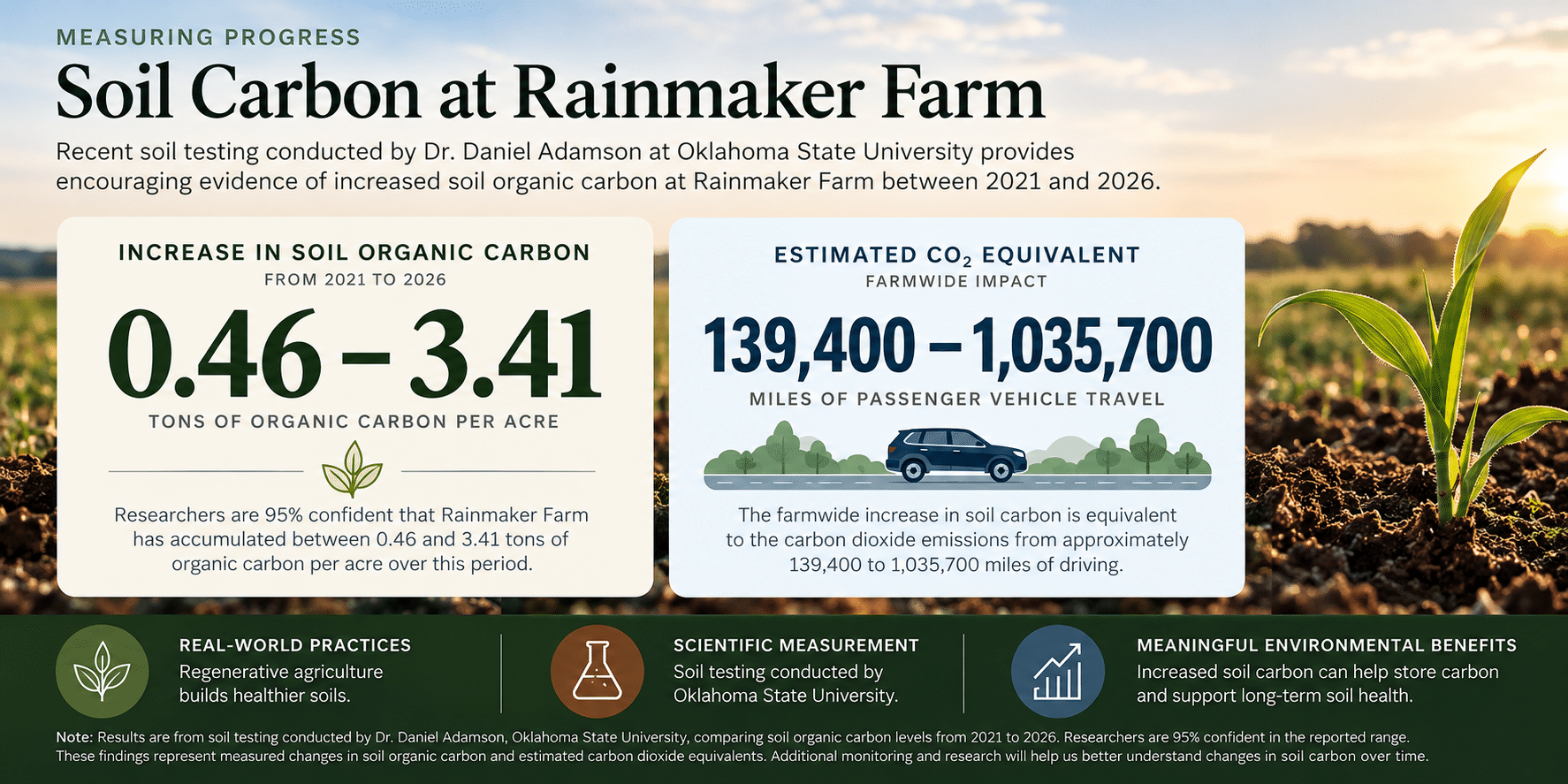
New soil testing conducted by Dr. Daniel Adamson at Oklahoma State University provides encouraging evidence of increased soil organic carbon at Rainmaker Farm between 2021 and 2026. These findings represent an important milestone in our efforts to measure the environmental outcomes of regenerative agriculture through independent scientific research.
Looking Ahead: Growing the Possibilities
As we enter the final quarter of 2026, we’re building on a year of progress, practical lessons, and growing connections.
From continued research and the A Greener World certification process to fall planting and Farm Day, the months ahead offer new opportunities to learn, adapt, and demonstrate what’s possible through regenerative agriculture.
But our vision extends far beyond Rainmaker Farm.
We’re building a place where researchers, businesses, and environmental innovators can work together to test ideas, measure outcomes, and develop solutions with the potential to make a difference beyond our 160 acres.
Partner with The Gulch to turn environmental ambition into measurable action.
Whether through research collaboration, corporate sponsorship, or support for on-the-ground initiatives, your organization can help advance practical solutions for healthier soils, resilient agricultural systems, and a more sustainable future.
Let’s explore what we can accomplish together.
The Gulch Environmental Foundation
www.gulchfoundation.org